
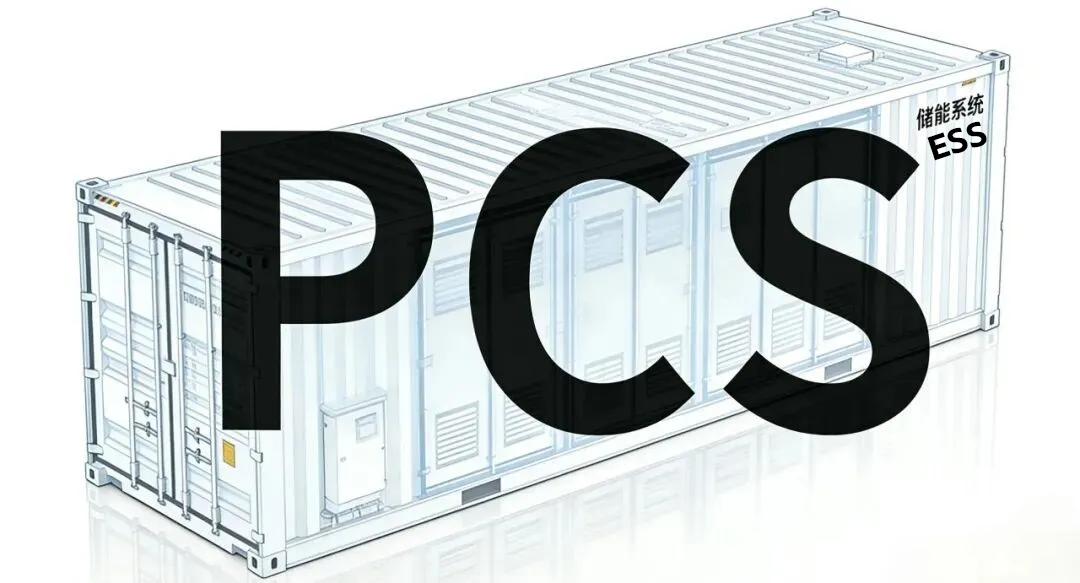
Within the energy storage sector, the Power Conversion System (PCS) serves as the essential core technology—the “internal mastery” that converts DC battery power into usable AC grid power. Although the fundamental purpose is the same, the industry has developed distinct technical “schools of thought” with their own architectures and trade-offs.
As commercial & industrial (C&I), grid-side, and utility-scale storage projects accelerate globally, understanding these mainstream technology paths is crucial for making informed investment and design decisions. This guide breaks down the four dominant PCS families: their logic, ideal applications, and key industry players.
| Technology Route | Core Architecture | Technical Ethos | Key Advantages | Typical Drawbacks | Market Positioning & Outlook |
|---|---|---|---|---|---|
| Centralized | Single, high-capacity PCS for centralized conversion. | Large, stable, simple, yet relatively crude. | 1. Lowest CAPEX 2. Grid-friendly for large-scale dispatch 3. Mature technology, stable delivery |
1. Severe ”barrel effect” (system limited by weakest cell) 2. Risk of circulating currents from DC parallel connection 3. Concentrated safety pressure |
Mainstay for large-scale grid-side storage. Will maintain a stable market share but requires safety enhancements. |
| String (DC-Coupled) | Modular design with “one cluster, one controller”. | Flexible, precise, and fault-tolerant. | 1. Optimal battery consistency management 2. High reliability with fault isolation 3. High safety, no inter-cluster circulating currents |
1. Slightly higher system cost 2. More complex integration and commissioning |
Dominant in C&I and distributed storage. Poised for the most sustainable growth. |
| Distributed (DC/DC + PCS) | Cluster-level DC/DC isolation + centralized PCS. | Safer, more stable, more complex. | 1. Completely avoids circulating currents 2. More precise charge/discharge control 3. Balances safety and scale |
1. Slightly lower conversion efficiency 2. Higher system commissioning requirements 3. Higher cost than centralized |
“Safety-enhanced version” for large-scale storage. Penetration rate in large projects will continue to rise. |
| High-Voltage Cascaded (H-Bridge) | Direct series connection for high-voltage output, no line-frequency transformer. | High-voltage, high-power, extremely high barriers to entry. | 1. Eliminates transformer, boosts efficiency 2. No parallel circulating currents 3. Significant economy-of-scale for ultra-large projects |
1. Extremely high engineering and commissioning barriers 2. Requires validation at scale 3. Complex O&M, stringent safety requirements |
Cutting-edge technology. A potential candidate for 100MW+ grid projects in the future. |
Choosing the Right Path: It’s All About the Application
There is no single “best” technology. The optimal choice is dictated by the project’s specific scale, application scenario, safety requirements, and total cost of ownership (TCO) considerations.
- For Utility-Scale Grid Storage (50MW+): Centralized remains the cost-effective workhorse, while High-Voltage Cascaded emerges as a high-efficiency alternative for future mega-projects.
- For Commercial & Industrial / Distributed Storage: String technology is the dominant leader, offering unmatched flexibility, safety, and granular management for diverse, smaller-scale sites.
- For Large-Scale Projects Prioritizing Safety & Performance: The Distributed architecture provides a robust middle ground, enhancing safety over traditional centralized systems for critical applications.
The Future is Diversified
The energy storage landscape is not converging on a single technology. Instead, the market is diversifying. The trend is clear: the future belongs to selecting the most suitable system architecture for a given scenario, balancing performance, safety, and economics throughout the system’s lifetime.
[Contact Our Energy Storage Experts Today for a Free Consultation]
Post time: Dec-06-2025